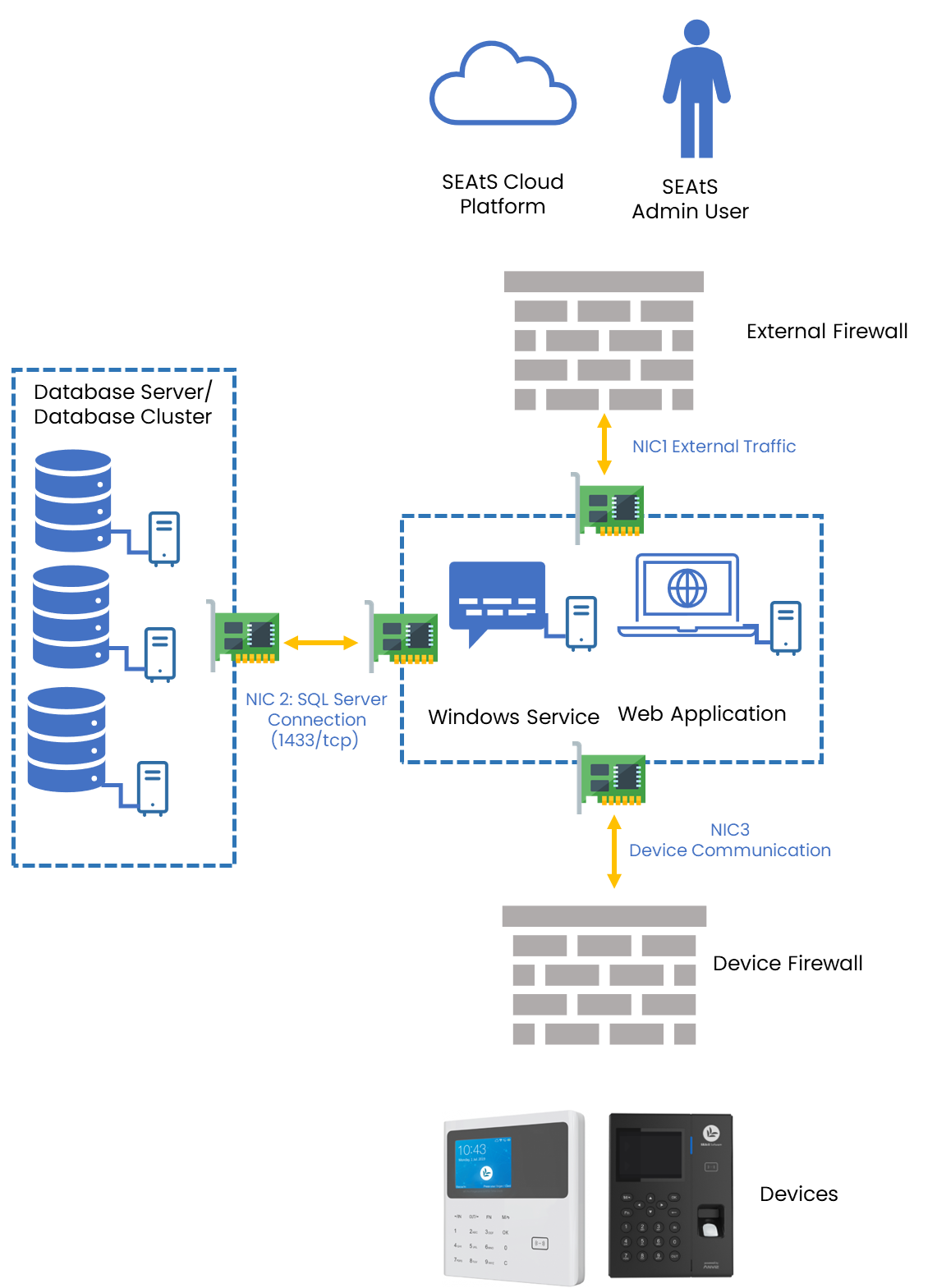
The purpose of the SEAtS Service Broker is to handle incoming requests from devices (e.g. card readers and biometric scanners) installed within the client's estate. The service broker handles all the card swipes and stores all data in the database, which is then sent on to the SEAtS Cloud Platform for attendance management and report generation.
This guide outlines the deployment options, technical considerations and deployment procedure for the on-premise SEAtS service broker.
Service Broker Components
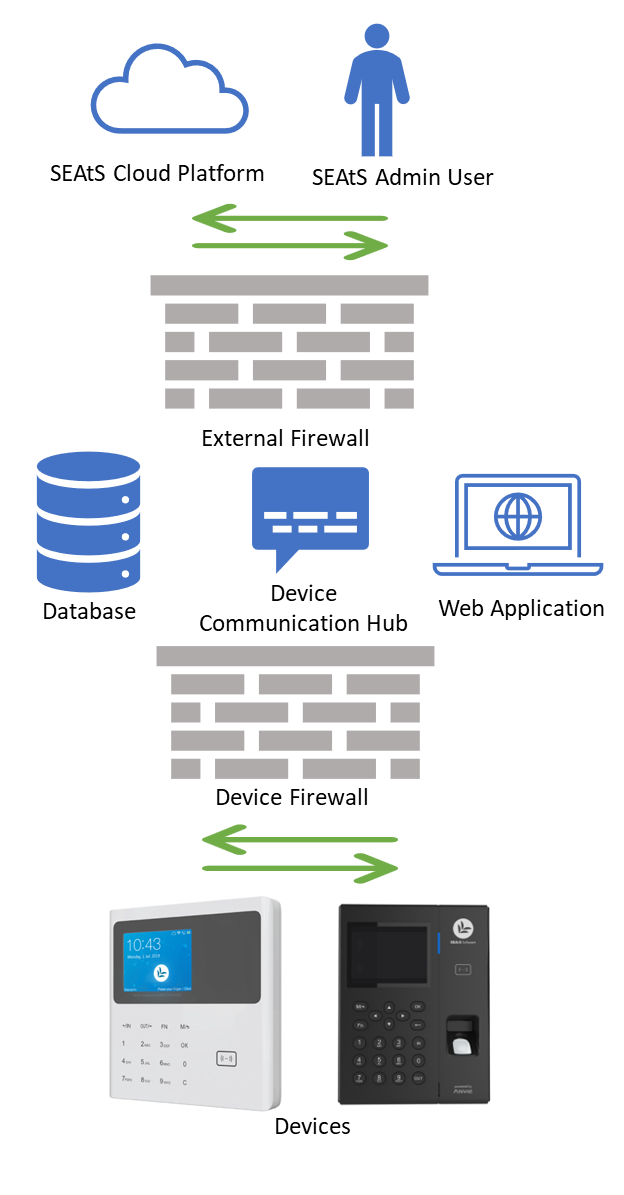
The SEAtS Service Broker is written using the Microsoft Technology stack (.NET 5 / ASP.NET Core 5) and utilises Microsoft SQL Server for its database. The deployment model is broken up into three components: web application, database and network topology.
Web Application (Core)
The web application provides an interface for device management and a user interface for SEAtS and university staff to carry out administration and view the status of all devices throughout the estate.
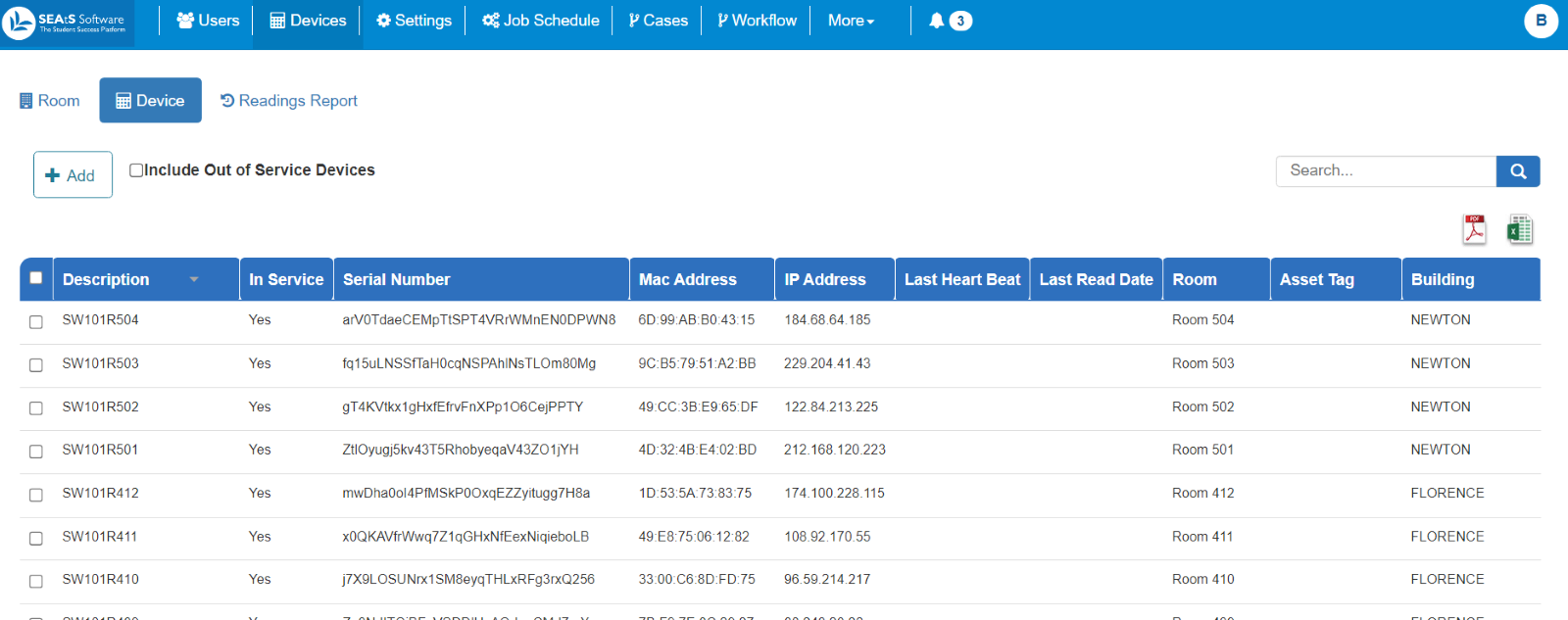
Requirements: Windows Server 2019 (or higher), Internet Information Services (IIS), .NET 5.
Database
The database provides central storage for card swipes before they are sent to the cloud. Supported SQL Server versions: 2017, 2019, 2022 (Web, Standard, Enterprise editions). All SQL Server high availability options are supported (Mirroring, Log Shipping, Always On).
Network Topology
The suggested deployment for a university is to have a private internal network for device communication to the on-premise service broker, and a second public internal network for administration staff access and communication to the SEAtS cloud platform.
Deployment Configurations
Configurations include Single Machine (all components on one server), Two Machines (database on a separate server), and Load Balanced HA (web application hosted on N+1 machines connecting to an HA SQL Server cluster).
Capacity Planning
Number of Devices | Web Application & Windows Service | Database Server 10–200 devices | 2 vCPU, 4 GB RAM, 100 GB OS + 80 GB Data | 2 vCPU, 4 GB RAM, 100 GB OS + 80 GB Data 200–600 devices | 4 vCPU, 8 GB RAM, 100 GB OS + 80 GB Data | 4 vCPU, 8 GB RAM, 100 GB OS + 80 GB Data 600+ devices | 8 vCPU, 16 GB RAM, 100 GB OS + 80 GB Data | 8 vCPU, 16 GB RAM, 100 GB OS + 80 GB Data
The service broker acts as a relay for sending communications to the SEAtS cloud platform. The database is designed to remove swipes after a defined period, and generally never grows larger than 1 GB for 6 months of usage.